Movie Lessons: Days of Being Wild (1990)
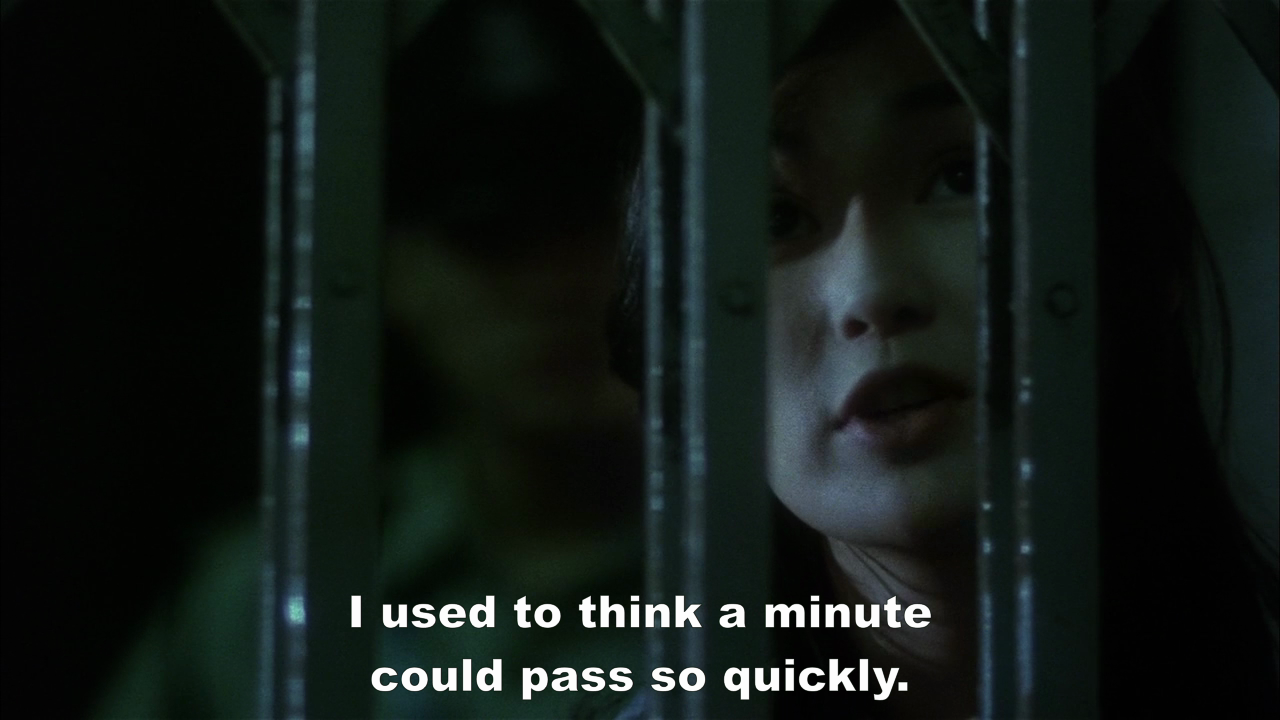


With the recent reboot of Sailor Moon it seems like an appropriate time to reevaluate why its so popular. For the uninitiated, Sailor Moon is the story of Usagi, a fourteen year old Japanese schoolgirl who is destined to fight forces of evil known as the Dark Kingdom, under the disguise of Sailor Moon. And, along the way, she meets other Sailor Scouts (yes, that’s what they’re called) who she becomes close friends with. Its basic premise is very typical of the ‘Magical Girl’ sub-genre, in Japanese animation, that it belongs to.

There will be a lot of people who love and loathe the changes in the reboot (Pretty Guardian Sailor Moon Crystal). It will supposedly follow the original manga incarnation of the story a lot closer. I don’t know what that entails exactly, but I’m interested in finding out. For most people, though, this is just the perfect excuse to revisit the good ol’ days. It will remind them of childhood, days of being innocent, ice-cream and lollipops. All that sort of stuff. There is a chasteness and romantic quality to something like Sailor Moon. It’s about good triumphing over evil and the importance of friendship and caring. Its qualities are in direct opposition of the merits of a show like Game of Thrones, where cruelty and calculated decision-making rule the roost. In Sailor Moon, the most important thing is love.

I know I’ll be watching it for those exact reasons. To cling or return to something more wholesome and earnest, something that seems long forgotten in our present age of entertainment. Because, despite the cruel and bleak qualities of a lot of the stuff I watch, sometimes you just want to escape from the real world. Sometimes being reminded about mankind’s failures and poorer qualities seems a bit unnecessary.
So, welcome back, Sailor Moon!
You can watch the first episode of the reboot online at crunchyroll.com here.
Ecstasy ecstatically pleases me
In these frequent bouts of flight.
Happiness haphazardly visits me
When I walk stark into the bright.
Pleasure potentially excites me
At the cusp of sensual delight.
Yet disappointment continues to visit
No matter how hard I try.
Born one after the other in
Imperfect sequence.
These girls exist as
Reminders of a man’s
Failure.
A man is not a man
Until his wife
Bears him a son.
That is the way
Of the father.
These daughters filled
With daddy’s disappointment
Carry resentment for
Each other: The girl who
Could have been a brother.
All our poor girls – now women –
Will toil away, leaving
More daughters behind,
Their husbands disappointed
With no successful successors.


Best known as Ozu’s first talkie (sound film), The Only Son (1936) is a highly accomplished domestic drama that would set the bar for all his subsequent features. It tells the story of a hardworking single mother who sacrifices what little life she has left to give her only son a chance at a future. She sends him to study in Tokyo, the city of opportunities, as she is led to believe that’s the right thing to do, after a talk with her son’s schoolteacher. Then time passes. Thirteen years, to be exact. The mother goes to Tokyo to visit her son and discovers he has a wife and a baby. He is also, to her disappointment, working as a night school teacher. Not quite what she had imagined for her son’s future. Not quite what she thought she had given up so much for.
If the plot sounds familiar it’s probably because it is. The central theme of shared disappointment between parent and child is a recurring motif in Ozu’s ouevre. It seems to be a precursor to something like Tokyo Story. The theme is even highlighted at the beginning of the film with a quote by Japanese writer Ryunosuke Akutogawa: “Life’s tragedy begins with the bond between parent and child.” This may as well be Ozu’s mantra.
What makes The Only Son standout is its narrative and structural elements you don’t normally find in Ozu’s films (at least not the ones I am familiar with). The first 15-minutes of the film are devoted to the life of the mother, dealing with her job as an employee at a silk-weaving factory, exploring her financial restraints, and showing her initial reluctance to give her son a proper education. And then, as previously mentioned, time passes. Such elliptical storytelling isn’t unique to Ozu’s films, as he often would omit essential plot details and jump ahead in time, but it was rare to see him jump so far ahead that actor’s have to be cast to play their older counterparts.
The remaining 65-minutes of the film are fascinating in their introduction of storylines that seem to mirror the central one: the reappearance of the son’s school teacher, who also moved to Tokyo in search of greener pastures, now working in a seemingly dead restaurant; and a neighbour’s son who is injured trying to impress his friends into letting him play with their baseball glove, because his mother can’t afford to buy him one.
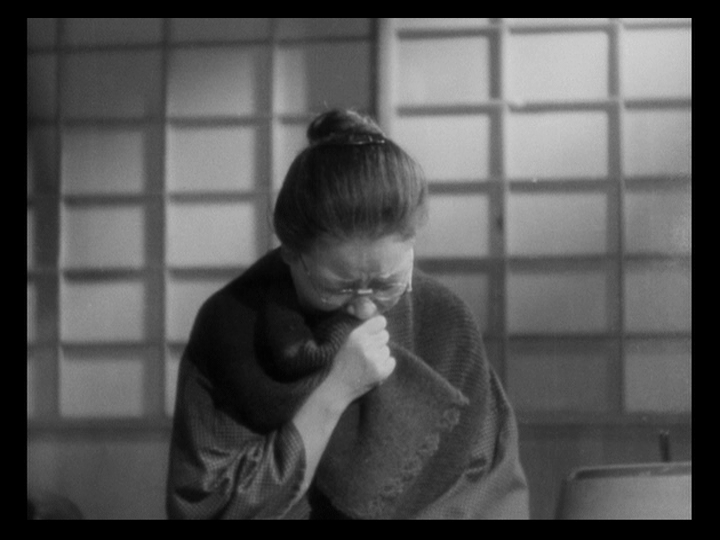
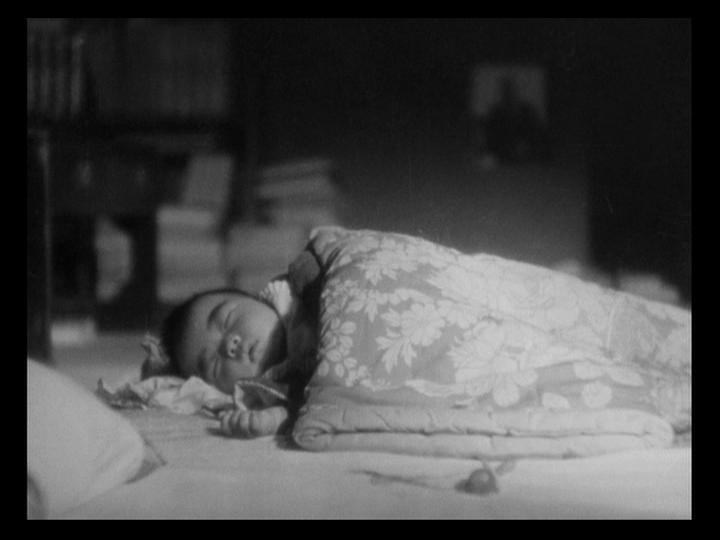
The most gut-wrenching scene of the film occurs when the titular son wakes up to find his mother unable to go to bed. He understands why. She is concerned for his wellbeing and disappointed by his position in life. He too is disappointed by life’s meagre offerings, but doesn’t know what else to do. She insists he must overcome all the necessary obstacles – to try harder. To be a great man, like he promised as a child. He says he cannot. She says he must. After all, she has given up everything for him and is now stuck living in the very factory she works; her house was sold to fund her son’s future. And, suddenly and unexpectedly, we hear crying. The only son’s wife has been listening to the conversation – awaken by their distress. She, like the audience, understands how filled with disappointment their lives are.
This scene is impeccably constructed. Ozu presents a domino effect of disappointment. Each character in the house is presented in a series of consecutive shots, each one visibly upset, except the final character, the sleeping baby. Ozu then bookends this moment of great tragedy in his usual way, with a pillow shot (narratively-unrelated shot of scenery). Perhaps he does this to let us digest the profound sadness we have only just witnessed. This pillow shot – of and empty room in the house – lasts for approximately a whole minute. We are forced take this moment in, to contemplate it, whether we want to or not.



In Ozu’s world, people are faced with disappointments throughout their day-to-day lives, the weight of responsibility and expectation. He wants to show us the world in all its relatable imperfection. The least we can do is accept and acknowledge the existence of these truths rather than blithely ignoring them. After all, he must have gone through great pains to show us these things. No art this honest is made without some sort of suffering.


Watched a brilliant early film by Yasujiro Ozu last night. The unbelievably sad The Only Son (1936). A bit rough around the edges in terms of tone. It’s not quite as restrained as his later works and has comedic flourishes reminiscent of his silent era. But I think it’s an early masterpiece alongside his earlier I Was Born, But… (1932).
I plan to go into further detail in the future regarding my thoughts on the film, but I couldn’t resist shining a spotlight on a very self-aware – dare i say, meta – moment that occurs almost halfway through the story. The titular character takes his mother to see the movies. At the beginning of the scene he explains that they are watching a talkie (or sound film). This is significant because this is, in fact, Ozu’s first talkie.
This is the only example I have witnessed of an Ozu film calling attention to itself.
(based on Lydia Davis’ short story ‘City Employment’)
Imagine the city you live in
Filled with all
Those characters
You see everyday:
The eccentric seniors
The fleeting strangers
The homeless stragglers.
But they are not
Who they are.
They are employees
Of a corporation:
The City Council.
Not quite actors,
But not the people
They appear to be.
Like yourself,
They have a job
To do. To fill
A role or two.
To play their
Part and pave
Their way.
(based on Lydia Davis’ short story ‘A Few Things Wrong with Me’)
A few things wrong with me,
We can’t help but consider
When the axe falls and
Our heart breaks.
Trading bards like swapping
Stories never seems to
Even out the swarmed
Stings that surround us.
We drip, drip, drip
Away into that corner.
Nothing left but a
Bags of tears.
(based on Lydia Davis’ short story ‘The Bone’)
Fillets of fish, labelled:
Boneless. Lies
they tell us
So we choke.
Can feel the prickly,
Pinching in
My throat. I want to
Claw it out – so horrible!
Gagging as the
Doctor pulls
Out the fishbone with
Careful precision.
Saved
A play by Edward Bond
(NOTE: The following mini-essay contains spoilers for the aforementioned play.)
First thing’s first, I am not easily shocked. Second thing, Edward Bond’s Saved shocked me.
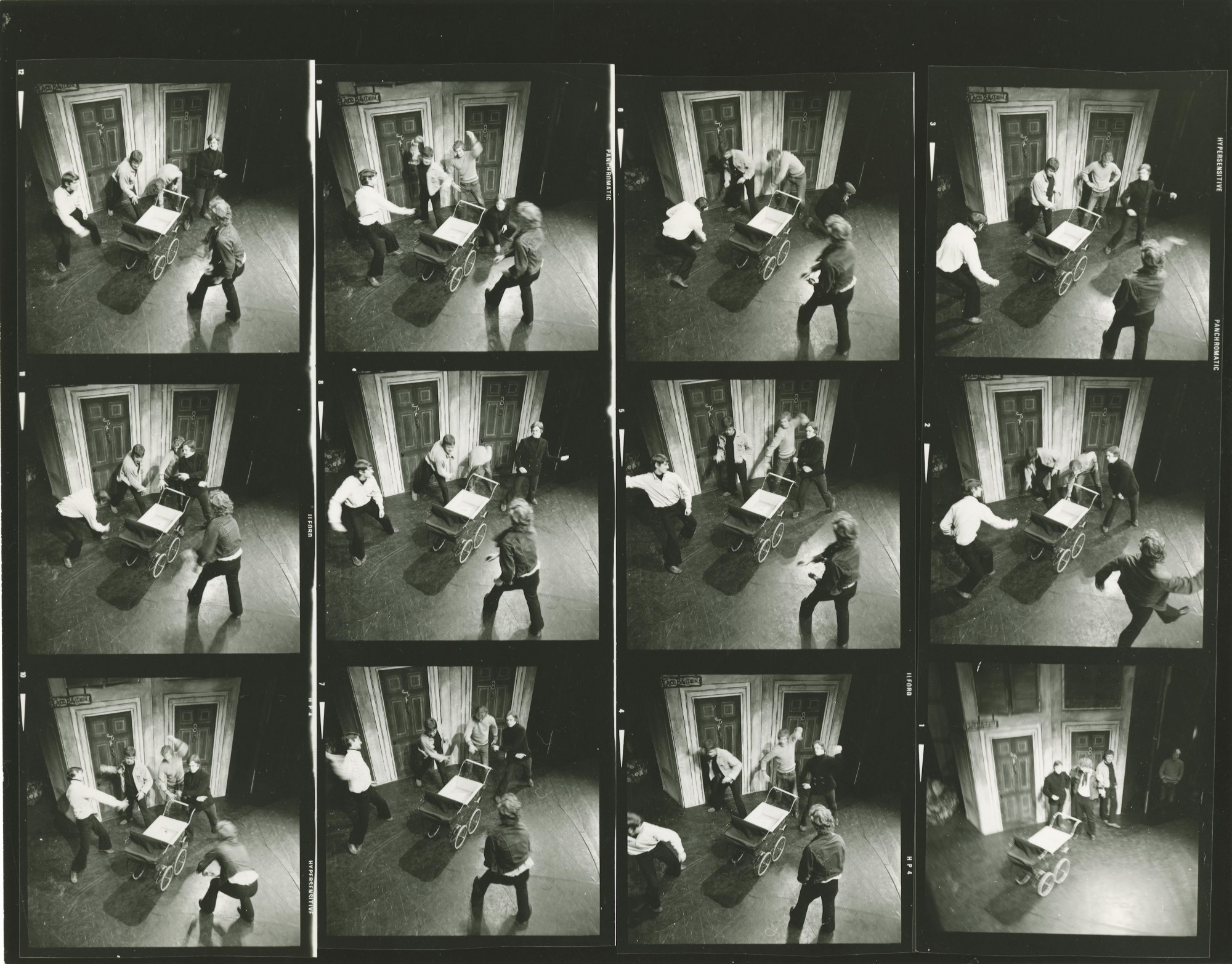
I didn’t have the (dis)pleasure of seeing it on the stage, and it is doubtful I ever will. But merely reading the words on the page gave me a glimpse of something deeply disturbing. Saved is a play that is rarely staged due to its infamous scene: A group of hooligans are messing around at a park. Pam, a young single mother, comes around with her baby in a pram to find one of the hooligans – the father of the child. He refuses to acknowledge the child as his. They argue, she storms off, and leaves the child behind. This is where things get messy. The hooligans begin to tease and torture the child, treating it with less compassion than if it were a farm animal. At first they just pretend the pram is a weapon to mow each other down with. But, soon enough, they begin pinching and punching the baby, then smearing its own shit all over it. Finally, the violence escalates into a game of stone-throwing with the child as the target.
There’s nothing quite as horrific as this moment, but the most shocking thing is the play’s determination to grasp at any grains of hope it can find. Most of the play’s characters are devoid of much humanity but they aren’t inhuman. They are symbols and products of social discord: men and women without jobs or dreams. We have but one ray of hope throughout the play: Len, the dopey but well-meaning lad who moves in with Pam and her parents at the beginning of the play as their tenant. He lingers around doing what he can, not quite friend or family but there nonetheless. He exists as evidence of some remaining moral compass in society and proof of possibility, though we don’t yet know what possibility that may be.
In the final moments of the play, Len is sitting down in the living room with Pam and her parents in silence. There has been conflict and strife. Pam has lost her child but seems to lash out with superficial concerns, blaming all those around her. Her parents have had a terrible fight after years of barely talking to each other. Len is at the center of all this though none of it is his fault. He could move out and start again, but that would be running away. So, he stays. He takes their broken chair and attempts to fix it. It is not easy to be optimistic and it certainly isn’t a happy ending. But it’s a start.
 yellowperilproductions.com