In Praise of Non-Traditional Venues

Shakespeare's Problems at Lucha Lounge

“If the stage cannot be richer than the text then let it be poorer.” –  Jerzy Grotowski

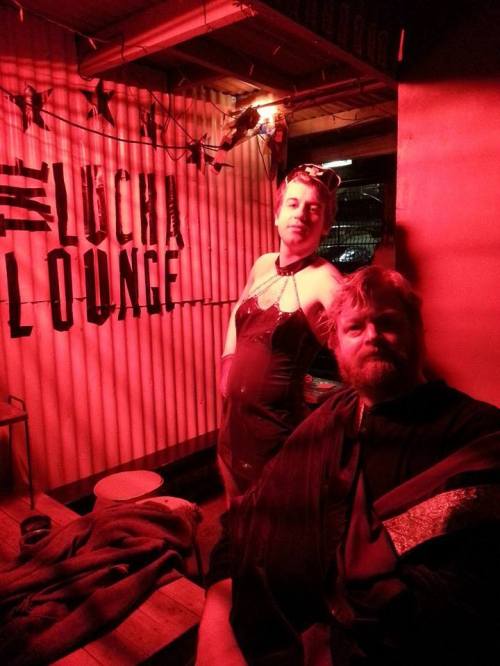
Last night I had the pleasure of seeing Shakespeare’s Problems directed by Patrick Graham. It contained three abridged problem plays (named as such because they are not easily categorised as comedy or tragedy) from Shakespeare’s canon: Measure for Measure, Timon of Athens and All’s Well That Ends Well.

It was staged at the Lucha Lounge, which can be described as a tiny indie music bar, using the floor as the stage. Not your usual venue for theatre, let alone Shakespeare’s plays. The main bar and backdoor area was crammed full of about two dozen people. It was an incredibly intimate experience if you were comfortable enough to immerse yourself into the narrative. Ay, there’s the rub: comfort. A couple of people ended up spilling over the edge from where they could see the actors or were forced to sit or stand in awkward positions. Being so close yet unable to ease into the show can cause a sort of unintentional distancing effect.

But I have nothing but praise for any theatre company putting something of quality on for what I imagine to be a shoe-string budget. The performances are passionate and filled with clarity, and the excerpts from each play standalone effectively, despite a lot of context being trimmed out. I even found myself ruminating over the possibilities of potential plays for different types of non-traditional venues too, and the ways to optimise such venues.

In Shakespeare’s Problems, the scene that achieved a unique closeness and intimacy was the dialogue between Parolles and Helena from All’s Well That Ends Well regarding virginity. This was doubly due to the fact I had one of the best seats in the house for that particular moment, as the actors sat in a tiny corner out the back of the bar. This goes to show that a key element in non-traditional venues should be: blocking and comfortable seating. These are obvious and crucial elements in theatre normally, but in this scenario they are almost as important as the performance itself in creating an air of intimacy.
The-Intricate-Art1

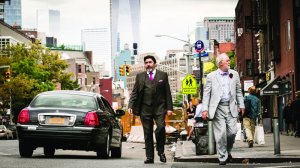
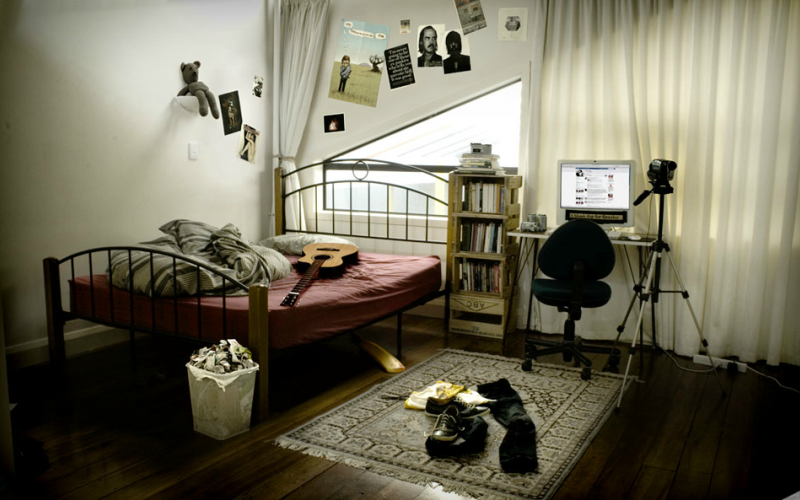
Another notable example of non-traditional venue use in New Zealand theatre is Eli Kent’s The Intricate Art of Actually Caring, originally staged in the confines of his bedroom. The basis of the story revolves around a road trip between two twentysomething mates. Simple enough stuff, but the ingenuity of turning one’s bedroom into this private world where we, the audience of no more than a dozen or so people, are gifted with the privilege to enter, is such a beautiful and moving conceit. The room becomes the vehicle of not only the road trip, but the vehicle to express themselves privately too. I never had the opportunity to see this show, but I have read the script and its reputation as great fringe theatre precedes itself.

vanya audience

The most famous international example of a non-traditional venue is Chekhov’s Uncle Vanya directed by Andre Gregory. The basic idea was to gather a small group of actors together and rehearse Uncle Vanya for no one but themselves in a run-down, abandoned theatre (without a proper stage). Eventually they decided to invite a few close friends and family to see it. Then they started inviting strangers from the street. And, finally, they invited filmmaker Louis Malle to capture it forever on film (Vanya on 42nd Street). These days it is considered the definitive production of Uncle Vanya (if such thing can exist) by many people, superior to those stiff, dry, almost academic BBC iterations. One could say the show had more in common with a sweet kiss than some broadway spectacle. Should that not be the goal of great theatre?

The Lydia Davis Project: Cockroaches in Autumn

(based on Lydia Davis’ short story ‘Cockroaches in Autumn’)

They are so like us, despondent
And quick to scatter at
First sign of danger:
A moving hand,
A rolled-up newspaper,
A falling foot.

Disgusting as they are to us
We cannot but help
Respect their stubbornness
To live. Their
Determination
To Survive.

What better way to
Prove you live
Than not
To die?

What Happened to Queer Cinema?

AnotherGayMovie

Somewhere along the line, after the shift towards mainstream gay acceptance, queerness in cinema died. Queer in the truest sense, not just films with gay characters, but unabashedly gay characters who challenge the status quo.

What do I mean I say “queer?” I mean strange, odd, different. And, most especially, transgressive and possibly shocking. Something that feels at odds with the rest of both mainstream heterosexual and mainstream gay culture. I’m talking about  films by directors such as Derek Jarman, Rainer Werner Fassbinder and Kenneth Anger; or the earlier efforts by guys still working in the business today: Gregg Araki, Gus Van Sant and John Waters. But, if contemporary LGBTI film festivals are any indicator, these transgressive punks of cinema have been replaced by a new wave of gay filmmaking. Films aimed at gay audiences but with commercial sensibilities, filled with contrived plots and lazy characterizations – like Eating Out (2004) or Another Gay Movie (2006).Blue-is-the-Warmest-Color

Palme d’Or-winning Blue is the Warmest Colour (2013) was a welcome addition to the gay film canon, but it wasn’t queer in the truest sense. It was encumbered by – a term I generally avoid – the “straight male gaze.” A film etched in class differences more so than concerns of queer expression, though it was undoubtedly a film with queer content: romantic and erotic female relationships, explicit lesbian sex scenes, and the questioning of one’s sexual orientation. At the end of the day, director Abdellatif Kechiche made a beautiful film, arguably great even, but it is a film in the vein of (but much better than) Brokeback Mountain (2005) – successful in intention and execution, but aimed at a non-queer audience. They are studies of characters with an ambivalence towards their sexuality rather than a celebration of it.

malanoche (1)

In Gus Van Sant’s debut feature film, Mala Noche (1986), we meet Walt, a gay store clerk. He falls in love – sudden, unrequited, obsessive love – with a boyish Mexican immigrant. At one point he even declares, “I have to show him that I’m gay for him.” Gay. Gay. Gay. This film is very gay. It’s not the sort of politically-charged work Van Sant’s later, but still successful, Milk (2008) is, with big stars and big locations. It’s free from the shackles and burdens of money, as well as its obvious benefits. It’s the work of a young gay director attempting to share something intimate. It is queerness personified, unfettered by any studio system or mainstream accolades.

in the  family

That is not to say that contemporary cinema lacks radical queer filmmaking. Andrew Haigh’s Weekend (2011), Apichatpong Weerasethakul’s Tropical Malady (2004) and Patrick Wang’s In the Family (2011) are all striking examples of queer films made within the last decade that feel unapologetic and radical in their own ways. Weekend for its unabashedly gay riff on David Lean’s Brief Encounter and authentic male-on-male sex; Tropical Malady for its unrelenting elliptical take on homosexual desire through surprising narrative structure; and In the Family for its endlessly empathetic depiction of the domestic drama from an outsider’s perspective.

Maybe it is the growing acceptance of the gay community in most of modern society that is the very cause for queer cinema’s lack of queerness. There is no desire to fight for something the community believes they have won. No longer do filmmakers want to offend the heterosexual sensibilities of others – or the heterosexual sensibilities they themselves have adopted. I’m personally not quite ready for queer cinema to assimilate and lose itself to cheesy rom-com sentiments or mainstream-arthouse sensibilities. There is always something to rebel against. Now we just need to find it.

NZIFF: Ten Films I Eagerly Anticipate

The New Zealand International Film Festival is consistently one of my annual highlights (except when I’m broke). Coming soon this July!

Here is a list of the ten films I look forward to the most (in some particular order):

KEY Boyhood_HiRes_1-0-800-0-450-crop

1. Boyhood
Dir. Richard Linklater
This film is the one I’ve been anticipating long before it had even finished shooting. This 164-minute film shot over the course of 12 years has the makings of what may be Linklater’s opus. It has a lot of expectations to live up to, but my fingers are optimistically crossed.

KEY winter-sleep-086454 © nuri bilge ceylan-0-2000-0-1125-crop

2. Winter Sleep
Dir. Nuri Bilge Ceylan
Described as Bergman meets Chekhov, and winner of the Palme d’Or this year at Cannes. I don’t even care what the plot details are.

WhyDontYouPlayInHell_KeyArt-0-2000-0-1125-crop

3. Why Don’t You Play in Hell?
Dir. Sion Sono
The film about filmmaking is a rite of passage for nearly all great directors. And Sion Sono is certainly a great filmmaker, albeit rough as guts.

KEY Cocteaus-La-belle-et-la-b-016-0-2000-0-1125-crop

4. Beauty and the Beast
Dir. Jean Cocteau
This has been on my to-watch list since forever. Now’s the perfect opportunity for me to see it on the big screen, baby!

KEY BOOST RED LIPS GREG under_the_skin_stills.193711-0-2000-0-1125-crop

5. Under the Skin
Dir. Jonathan Glazer
Birth is one of my favorite films by one of the least prolific directors I can think of. This third feature has been a long time coming but I am definitely excited for it. Scarlett Johansenn playing a sexy alien. What more do you need to know?

KEY Alejandro-Jodorowsky-interview-shot-021-0-800-0-450-crop

6. Jodorowsky’s Dune
Dir. Frank Pavich
I’ve never read Dune, but I’ve always been interested in the legacy surrounding it and the legacy surrounding the films of it – or, more specifically, the film that never came to be. Oh, and Jodorowsky is one awesome dude too.

KEY 03_It Follows-0-2000-0-1125-crop

7. It Follows
Dir. Robert Mitchell
Sex and death are two of my favourite topics. So, a horror film that explores sexual anxiety through a metaphysical STI seems like the perfect treat for me.

KEY 2J1N_photo8∏ christine plenus-0-2000-0-1125-crop

8. Two Days, One Night
Dir. Jean-Pierre Dardenne, Luc Dardenne
The Dardenne brothers are always welcome.

KEY LoveIsStrange_still1_AlfredMolina_JohnLithgow__byJeongPark_2013-11-29_04-16-25PM.jpg_cmyk-0-800-0-450-crop

9. Love Is Strange
Dir. Ira Sachs
What romantic pairing could be more peculiar than Jim Carrey and Ewan McGregor? Why John Lithgow and Alfred Molina, of course!
I actually wasn’t the biggest fan of Ira Sachs previous film, Keep the Lights On, but it had its virtues and I think the  casting is too good to pass up.

300 dpi - 2013 Berkeley Film Inc 300dpi -0-800-0-450-crop

10. At Berkeley
Dir. Frederick Wiseman
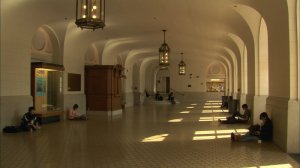
When I first heard about this film I was intrigued. When I found out its running time (244-minutes) I was ambivalent. But, as a young person who never had a formal university education, the basic idea of capturing a year at UC Berkeley fills me with too much curiousity. Maybe I hope to live vicariously through these students – to find out what I missed.

Honourable Mentions:
52 Tuesdays, Housebound, Map to the Stars, Lilting, The Reunion, Pulp, Everything We Love, Our Sunhi, Hard to be a God, We Are the Best!

Lydia Davis Project: Visit to Her Husband

(based on Lydia Davis’ short story ‘Visit to Her Husband’)

Speech so sudden and
Sullen from the mouths of
Both him and her.

They once shared love.
Now they share unfulfilled
Discussion after discussion,
Incomplete and insincere.

This final conversations finds
Itself interrupted by overlapping
Indecisions and reversed by
Faltering revisions.

Now with this marriage
Finally over, maybe
They can start all
Over again.

Lydia Davis Project: In a House Besieged

(based on Lydia Davis’ short story ‘In a House Besieged’)

Man and woman
Live amidst terrors
Such as war and weather.
They are certain
Of these few things.

Long ago
Both decided
The only safety
Was between
Four walls.

Their lives – so
Boxed up and
Closed off to
The world. Afraid
Of it all.

Enlightenment in 2014

Air of introspection
Penetrates our membranes.
Sitting in a bookshop corner
Satisfied by a sign:
SELF HELP

Vivienne, Student, Auckland (2013)

The Lydia Davis Project: Mothers

(based on Lydia Davis’ short story ‘Mothers’)

Mother – is it blood or other
That defines you?

Did you hold me in your womb?
Did you cradle me in your arms?
Did you feed me from your breast?

Mother – do I know you?

Am I your only son
Or were there others?

Was the name you gave me
What I deserved or were
You hoping for a better child?

Mother – I’m afraid
Of you dying, and
Being left alone with you.
Are those the only options?

I wonder what sorts of mothers
The other children had.

The Lydia Davis Project: How W.H. Auden Spends the Night in a Friend’s House:

(based on Lydia Davis’ short story ‘How W.H. Auden Spends the Night in a Friend’s House:’

As a visitor
You are unfamiliar
To the nuances of
another’s home.

It is filled with silence,
Unfamiliar silence, ambient
Buzzing of the unknown.

It’s past midnight –
still awake.
No chance of
Resting amongst
Foreign sheets.

There are no
Lofty comforts in
What feels like a
Stranger’s room.